
Reformatting Antibodies for Precision and Performance
Explore the full spectrum of antibody reformatting techniques—from chimerisation to Multivalent Variants; tailored for research, diagnostics, and therapeutics.
Reformatting Antibodies for Precision and Performance
Explore the full spectrum of antibody reformatting techniques—from chimerisation to Multivalent Variants; tailored for research, diagnostics, and therapeutics.
We know scientific priorities change.
Antibody reformatting enables the adaptation of existing molecules to new therapeutic goals, improved functionality, and enhanced developability. By modifying antibody architecture, such as changing format, isotype, or Fc configuration, biological activity can be fine-tuned without starting from scratch.
At Fusion Antibodies, we apply deep structural insight and engineering expertise to seamlessly reformat antibodies with precision. Whether you’re optimizing efficacy, reducing risk, or enabling a new mechanism of action, our reformatting strategies are designed to deliver high-performance molecules ready for downstream development.
Reformatting Techniques
Chimerisation
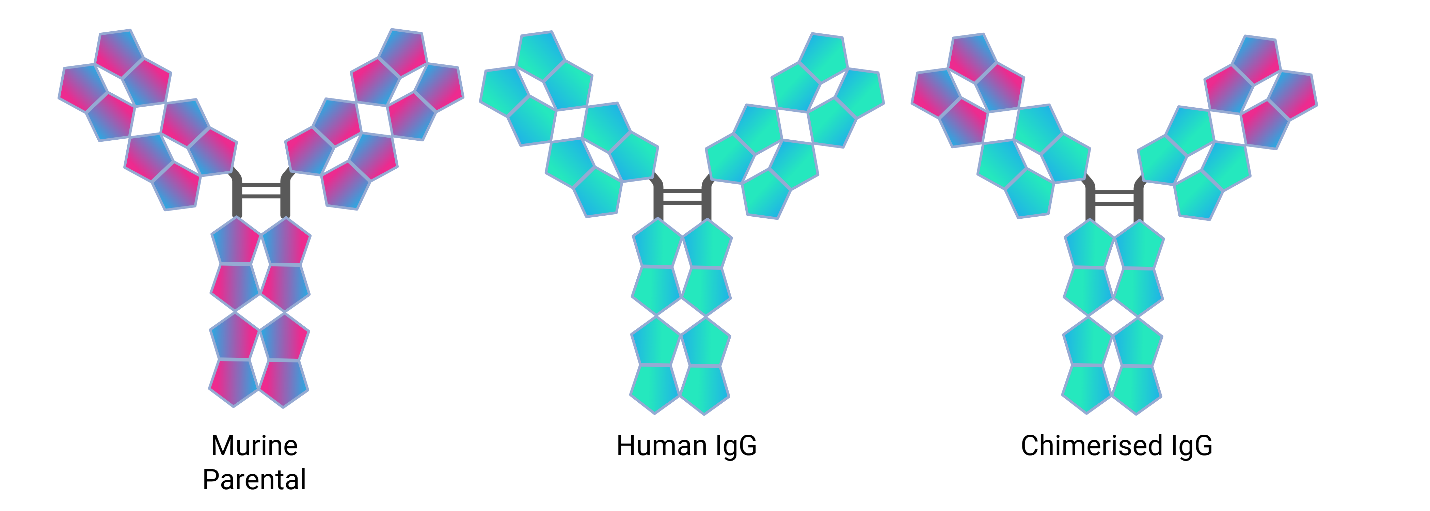
Chimerisation involves combining the variable regions of one species (commonly murine) with the constant regions of another (typically human). This hybrid format aims to retain antigen specificity while reducing immunogenicity in human therapeutic applications.
WHY?
- Enables early-stage therapeutic testing using murine antibodies
- Facilitates downstream humanisation and affinity maturation
USAGE
- Preclinical therapeutic development
- Proof-of-concept studies
- Diagnostic reagents with reduced cross-species reactivity
Isotype Switching
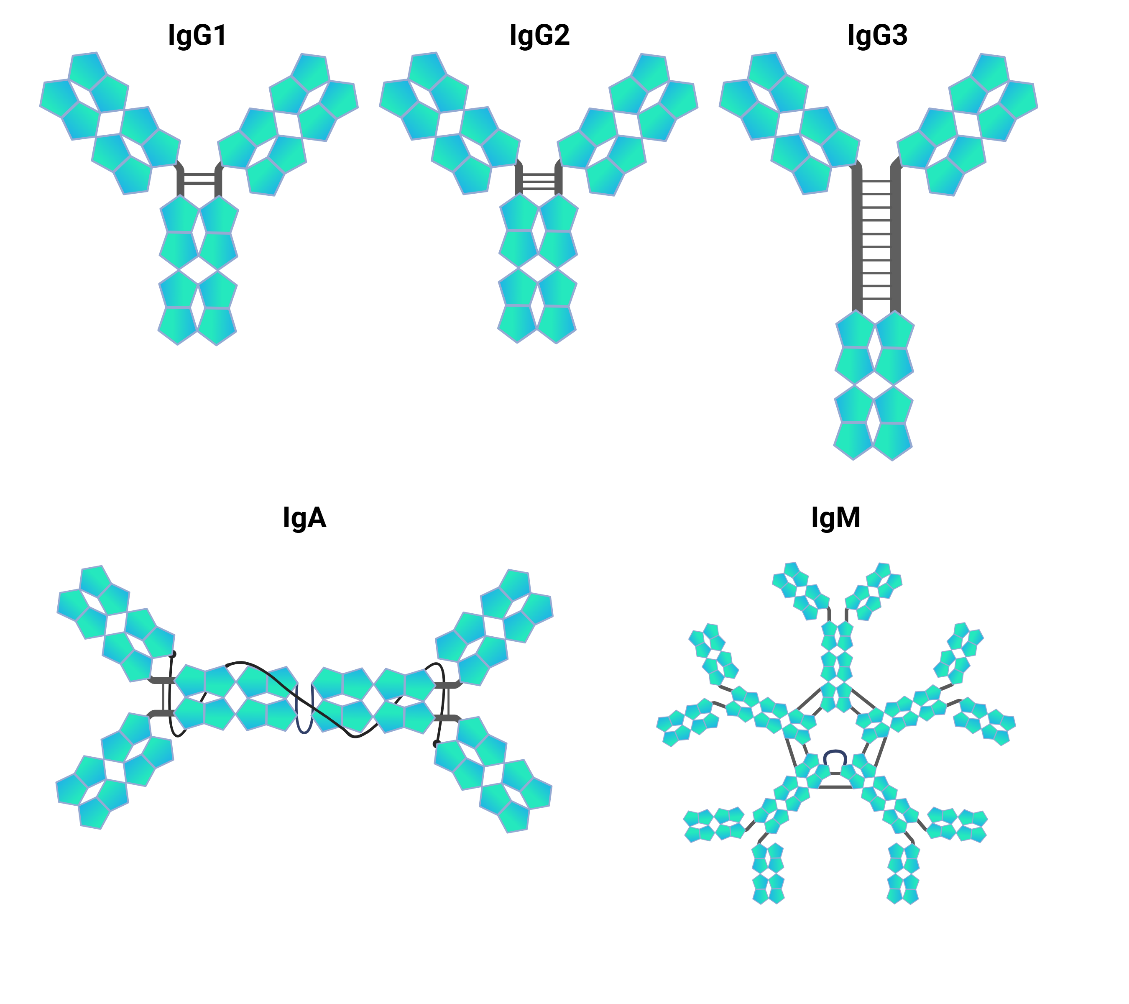
Isotype switching refers to changing the antibody’s constant region to a different immunoglobulin class (e.g., IgG1, IgG4, IgA, IgM), without altering its antigen-binding specificity.
WHY
- Modulates effector functions such as:
- ADCC (Antibody-Dependent Cellular Cytotoxicity)
- CDC (Complement-Dependent Cytotoxicity)
- Tailored antibodies for specific therapeutic or diagnostic roles
USAGE
- IgG1 for strong immune activation in cancer immunotherapy
- IgG4 for reduced effector function in autoimmune applications
- IgA for mucosal immunity targeting
Fragment Formatting
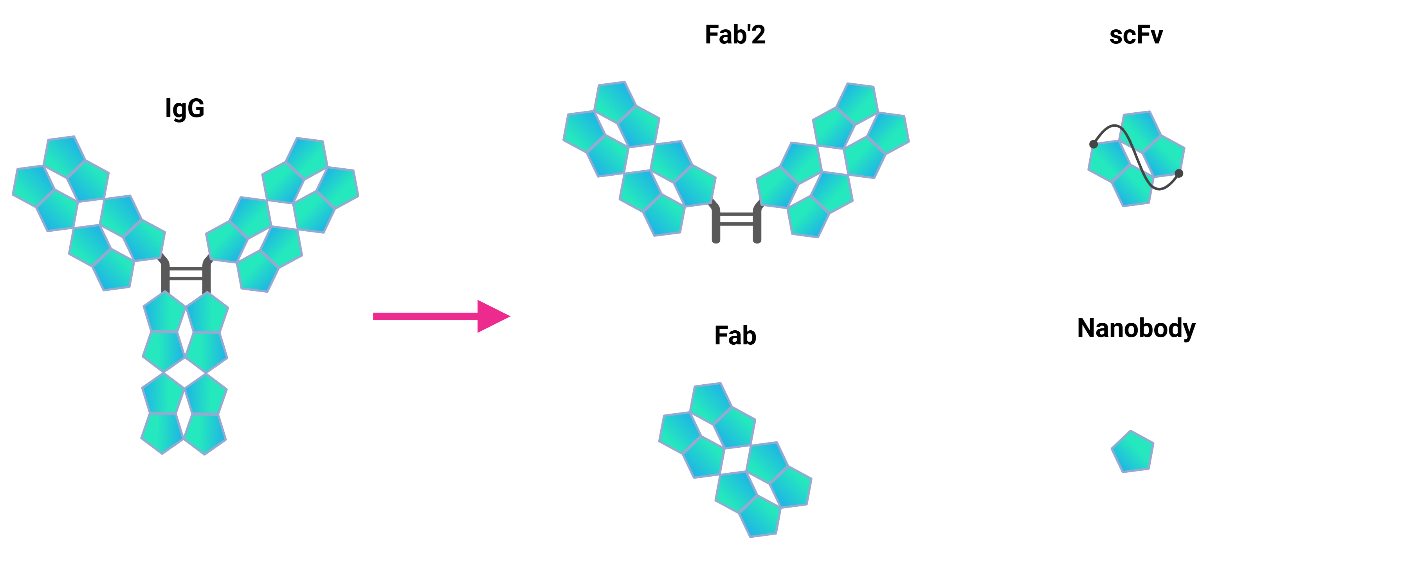
Fragment formats are engineered antibody derivatives that include only parts of the full-length antibody, such as:
- scFv (single-chain variable fragment)
- Fab (fragment antigen-binding domain)
- Fab’2 (miniaturised antibody maintaining both variable arms)
- Nanobodies (single-domain antibodies)
WHY?
- Smaller size allows better tissue penetration
- Faster clearance rates for imaging or short-term applications
- Easier expression in bacterial or yeast systems
USAGE
- Imaging agents
- Rapid diagnostic tests
- Targeted delivery systems
ADVANTAGES
- Cost-effective production
- High stability in harsh conditions
- Customisable formats for multivalency or bispecifics
- Improved tissue and cellular matrix penetration
Fc Engineering
Fc engineering modifies the Fc (fragment crystallisable) region of antibodies to enhance or suppress immune interactions, extend half-life, or improve stability.
TECHNIQUES
- Fc Mutations: Altering FcγR binding to modulate ADCC/CDC
- Half-Life Extension: Enhancing neonatal Fc receptor (FcRn) binding
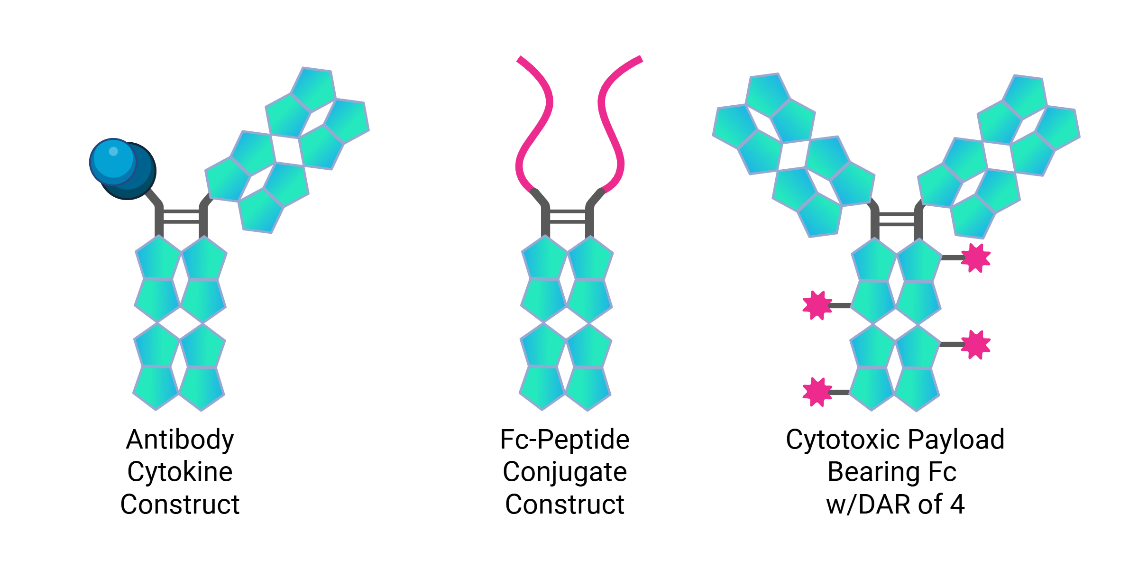
- Fc Fusions: Linking Fc to other proteins (e.g., cytokines, enzymes)
- Albumin Fusions: Increasing serum stability and tissue distribution
WHY?
- Improves therapeutic efficacy
- Reduces dosing frequency
- Enables multifunctional antibody formats
USAGE
- Long-acting biologics
- Immune checkpoint inhibitors
- Fusion proteins for targeted therapy
Why Chose Fusion?
Our capabilities are tailored to meet the evolving demands of modern biotherapeutics and precision diagnostics, our approach ensures your antibodies are optimally configured for performance, stability, and translational success, fit for your intended purpose.
- Direct interaction with scientists who understand your data and objectives
- Transparent decision-making and clear rationale at every step
- Collaborative problem-solving when challenges arise
Begin with the End in Mind
Tell us what you’re working on.
Share the useful starting details and your enquiry will be sent securely to Fusion’s scientific team.